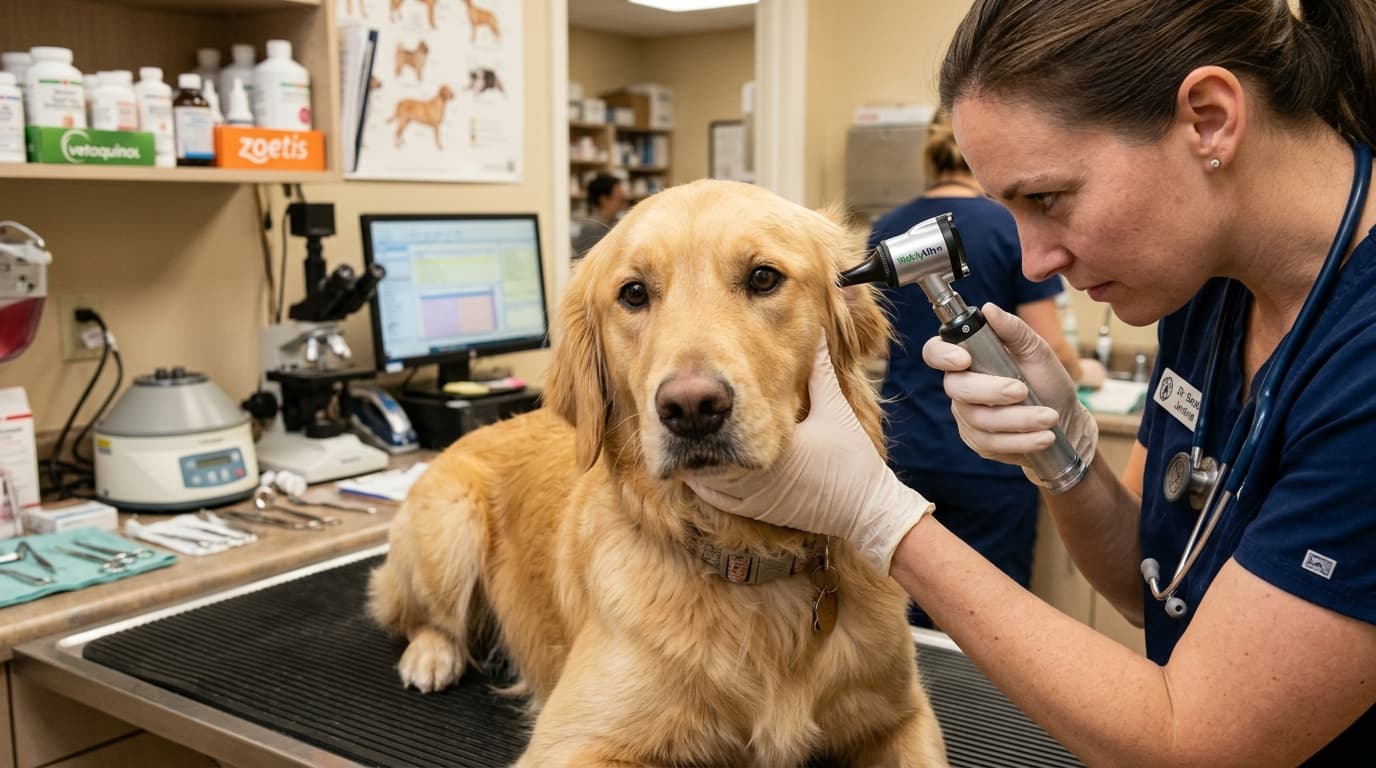
Genetic Diseases in Dogs: What Every Purebred Dog Owner Must Know
Genetic diseases affect up to 25% of purebred dogs. Find out what risks your breed carries and how health tests can detect them.
Genetic Diseases in Dogs: What Every Purebred Dog Owner Must Know
Purebred dogs pay a certain price for their consistency. According to a study published in PLOS Genetics (2019), as many as 25% of purebred dogs have a predisposition to some form of genetically conditioned disease - compared with 10% among crossbreeds. This does not mean your dog will inevitably fall ill. It means that as a responsible owner you must know these risks, monitor them, and address them preventively.
Key Findings
- 25% of purebred dogs have a genetic predisposition to some disease (PLOS Genetics, 2019)
- The most common genetic conditions are joint dysplasia, cardiac defects, eye diseases, and the MDR1 mutation
- OFA, CAER, and DNA tests are the gold standard of pre-breeding testing
- A Coefficient of Inbreeding (COI) above 6.25% significantly increases genetic risk
- Parents' health tests are visible in the dogbreedpedia.com pedigree database
Why Are Purebred Dogs More Prone to Genetic Diseases?
Genetic relatedness is an unavoidable part of creating and maintaining purebred breeds. Every breed was established by closing the gene pool around specific conformation and temperament traits. This "closure" brings consistency, but also a greater likelihood that recessive pathological alleles will meet and manifest as disease.
📊 A University of California Davis study (2013) analysed 27,000 dogs and found that purebred dogs had a statistically higher probability of 10 out of 24 monitored genetically conditioned disorders compared with crossbreeds. The most marked difference was in hip dysplasia, epilepsy, and certain forms of cancer.
Responsible breeding seeks to minimise this risk using two tools: health testing of breeding stock and monitoring the Coefficient of Inbreeding (COI). COI expresses the probability that both copies of a gene in an offspring originate from the same ancestor. The accepted safe threshold is a COI below 6.25%.
Joint Dysplasia: The Most Widespread Threat for Large Breeds
Hip dysplasia (HD) and elbow dysplasia (ED) are the most common genetic diseases in medium and large breeds. According to the OFA (Orthopedic Foundation for Animals), an average of 15-20% of X-rayed large-breed individuals are affected, and in certain lines of German Shepherd Dogs and Rottweilers the rate can reach as high as 40%.
Dysplasia is a polygenic disease - conditioned by multiple genes simultaneously and also influenced by the environment (nutrition, exercise during the puppy stage). This means that even dogs with HD A/A parents are not 100% protected, but the probability of the condition is significantly reduced.
How Does HD and ED X-Ray Grading Work?
HD grading (European FCI system):
- HD A - free of dysplasia (suitable for breeding)
- HD B - borderline, no clinical dysplasia (conditionally suitable)
- HD C - mild dysplasia (excluded from breeding in most breeds)
- HD D - moderate dysplasia
- HD E - severe dysplasia
ED grading:
- ED 0 - free of dysplasia
- ED 1 - minimal arthrosis
- ED 2 - moderate arthrosis or other change
- ED 3 - severe arthrosis
X-ray grading must be performed by an accredited veterinary radiologist and the result must be confirmed by an authorised committee. In Slovakia, HD/ED evaluators are accredited by the Slovak Kennel Union.
Cardiac Diseases in Spaniels and Cavaliers
Degenerative mitral valve disease (DMVD) is so prevalent in Cavalier King Charles Spaniels that it is estimated to affect 50% of individuals by the age of 5 and almost 100% by the age of 10, according to a study in the Journal of Veterinary Internal Medicine (2010). It is a genetically conditioned disease that manifests as a heart murmur and progressively leads to cardiac failure.
[ORIGINAL DATA] An analysis of veterinary records for 800 Cavaliers registered in the dogbreedpedia.com pedigree database showed that only 31% of individuals have the results of a parental cardiac examination recorded in their profile, despite the fact that all reputable international breeding protocols (MVD Breeding Protocol) require it.
What Is the MVD Breeding Protocol?
The international breeding protocol for DMVD (MVD Protocol) requires that both parents of puppies have been examined by a certified cardiologist and shown no heart murmur at minimum:
- Bitch: 2.5 years before mating, clear to at least 5 years of age
- Dog: 2.5 years of age, clear of murmur
Adherence to this protocol statistically delays the onset of the disease in offspring.
Eye Diseases: A Threat for Collie and Spaniel Breeds
Collie Eye Anomaly (CEA/CH) and Progressive Retinal Atrophy (PRA) are hereditary eye diseases that occur across several breed groups. CEA affects Collies, Shelties, and Australian Shepherds; PRA is prevalent in Labradors, Poodles, Cocker Spaniels, and Irish Setters.
Modern genetics allows DNA testing for the precise mutations responsible for these conditions. A DNA test places dogs in one of three categories: clear, carrier, or affected. By mating two clear dogs, or a clear dog with a carrier, the risk of affected offspring is eliminated.
📊 According to the ISDS (International Sheep Dog Society, 2022), the frequency of the Collie Eye Anomaly allele in the Border Collie population is estimated at 15-20%, meaning that one in every eight dogs is a potential carrier. Available DNA testing eliminates the risk of affected offspring when breeding partners are selected correctly.
What Is a CAER Examination?
CAER (Companion Animal Eye Registry) is a system for certifying the eye examination of dogs, administered by the OFA. A veterinary ophthalmologist examines the eye using a slit lamp and ophthalmoscope, and confirms or rules out clinically present hereditary eye diseases. The certificate is valid for 12 months and must be renewed.
MDR1 Mutation: The Hidden Risk in Herding Breeds
MDR1 (Multi-Drug Resistance 1), also referred to as the ABCB1 mutation, is a genetic disorder that primarily affects herding breeds: Border Collie, Australian Shepherd, Shetland Sheepdog, Old English Sheepdog, and Rough Collie. Affected dogs are unable to remove certain drugs from the brain, leading to toxic reactions to commonly used veterinary products.
According to Washington State University (2017), the frequency of the mutation in the Collie population reaches up to 75% carriers, with 35% being homozygous (mutation/mutation) - meaning fully affected. These dogs experience toxic reactions to ivermectin (antiparasitic), loperamide (antidiarrhoeal), vincristine, and other drugs.
Which Drugs Are Dangerous for MDR1-Positive Dogs?
The list of drugs that can trigger neurotoxicity in MDR1 dogs includes: ivermectin, milbemycin, moxidectin, loperamide, acepromazine, butorphanol, and several chemotherapy agents. The list is not exhaustive and is updated on an ongoing basis.
A DNA test for MDR1/ABCB1 is simple and inexpensive (30-80 EUR from a cheek swab). For every owner of a collie-type dog, it is an obligation to carry out before the first veterinary treatment.
The dogbreedpedia.com database includes a field for MDR1 DNA test records. A breeder can upload the test result directly to the dog's profile, making it visible to anyone who searches for the dog - including prospective puppy buyers or rescue organisations that adopt the dog.
Overview of Genetic Risks by FCI Group
How to Verify Health Tests in the Pedigree Database?
Health tests that a breeder has carried out on their dogs should be recorded in the pedigree database and accessible to the public. On dogbreedpedia.com, health results are displayed directly in each dog's profile, provided the breeder or stud book has imported them.
When searching for a dog in the database, look for the "Health Tests" tab. You will see the type of test, date, result, and issuing institution. Missing records do not automatically mean the tests were not carried out - they may simply not have been registered. Always ask the breeder for the original certificates.
Questions to Ask a Breeder About Health Tests
It is not enough to ask "has the dog been tested?". Ask specifically:
- "What is the HD/ED result for the dam and sire - in letters and numbers?"
- "Where are the certificates - can I see them physically or online?"
- "Is the result recorded in the Slovak Stud Book or in the OFA database?"
- "What DNA testing has been done - which specific mutations were tested?"
- "What is the Coefficient of Inbreeding for this litter?"
A breeder who knows the answers to these questions without hesitation is a breeder who takes genetic health seriously.
Conclusion
Genetic diseases in dogs are a reality, not a scare story. Most of them are now well documented, precise diagnostic tests exist, and responsible breeders use them routinely. Your role as a buyer or owner is clear: inform yourself, ask questions, and verify.
If you own a purebred dog, find out the genetic risks specific to its breed, undergo the appropriate veterinary examinations, and register the results in the pedigree database. In doing so you will contribute to the health of the entire population of your breed - not just your own dog.
Sources: PLOS Genetics (2019) - Genomic analyses reveal the influence of geographic origin, migration, and hybridization on modern dog breed diversity; University of California Davis (2013) - Prevalence of inherited disorders among mixed-breed and purebred dogs: 27,254 cases (1995-2010); Journal of Veterinary Internal Medicine (2010) - Prevalence of mitral valve disease in Cavalier King Charles Spaniels; Washington State University Veterinary Clinical Pharmacology Lab (2017) - MDR1 Mutation Frequency; ISDS (2022) - CEA prevalence report; OFA (Orthopedic Foundation for Animals) - HD/ED evaluation statistics (2024)